Explore jobs
Find specific jobs
Explore careers
Explore professions
Best companies
Explore companies
This question is about jobs.
What is a certification?
A certification is a certificate gained by an individual that demonstrates knowledge, skills, and experience in a specific job or program. Certifications can be earned in many different industries, and fields, and also with different kinds of computer software or other tools.
Certifications, also called professional certifications, help job candidates stand out in their field by demonstrating expertise in a specific area. Employers often look to see if a candidate has a certification relevant to the role they are seeking with the company.
In addition, certain jobs require professional certifications to be considered. Professional certifications are offered by professional associations.
A professional association is composed of a group of professionals in a particular field or industry that are entrusted with maintaining control and/or oversight of the legitimate and optimal practice of that particular occupation. They also often operate in a way that safeguards public interest.
Professional associations often offer professional certifications for individuals in a specific field. Professional certification demonstrates expertise and skills in a particular area or industry that the professional association is affiliated with.
Here are some examples of certifications:
Professional in Business Analysis (PMI-PBA)
This certification is helpful for those in project management who want to display a good understanding of how to manage business objectives. If you want to specialize your project management career path in business analysis, this is a great certification to obtain.
You must have at least 60 hours of business experience and 35 contact hours of coursework in business analysis.
Certified Associate in Project Management (CAPM)
This certifies you have foundational knowledge in the area of project management. This is good for those just starting off on the project manager career path. It also helps to grow your knowledge and expertise in this field. You do not need professional experience to attempt to gain this certification.
Financial Services Audit Certificate (FSAC)
This is a specialized certification offered by the Institute of Internal Auditors (IIA). The FSAC certification replaces the Certified Financial Services Auditor (CFSA) certification.
It demonstrates competence and expertise in 11 areas, including cybersecurity risks, fraud risk assessment, financial services audit, liquidity risk management, internal auditing in financial and insurance services, auditing capital adequacy for banks and auditing for credit risk, market risk, model risk management, and third-party risk.
Those seeking roles on the accounting career path in auditing, fraud, and risk management benefit greatly from obtaining the FSAC. Passing a program covering the 11 subjects is the gateway to this certification.
Certified Management Accountant (CMA)
This certification is offered by the Institute of Management Accountants (IMA), and demonstrates expertise in forecasting, cost management, decision analysis, and internal control auditing.
It also exhibits a mastery of financial management skills and critical accounting skills in a managerial or general capacity. Many accountants pursuing careers in large multinational companies seek to obtain both the CMA and CPA certifications.
Candidates must have at least a bachelor's degree and two consecutive years of experience in financial management, or management accounting. This exam has two levels that normally take eight hours to complete.
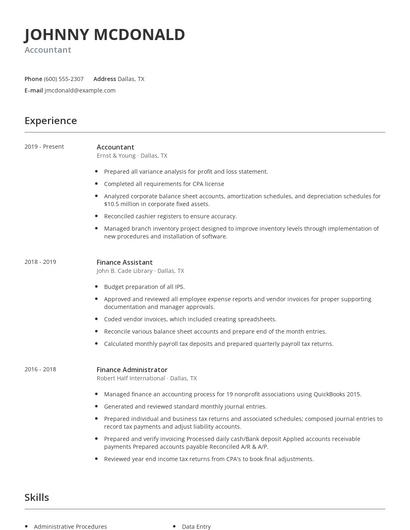
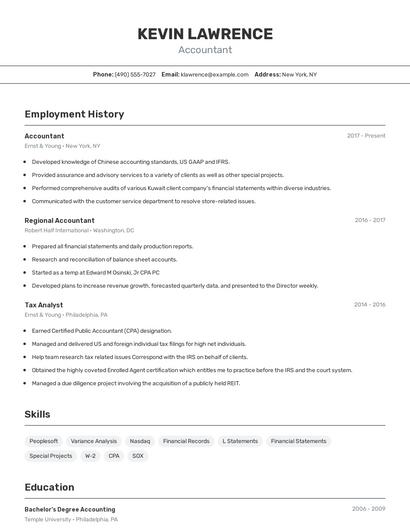
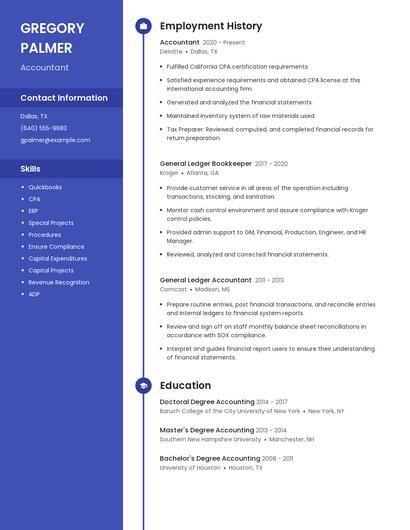
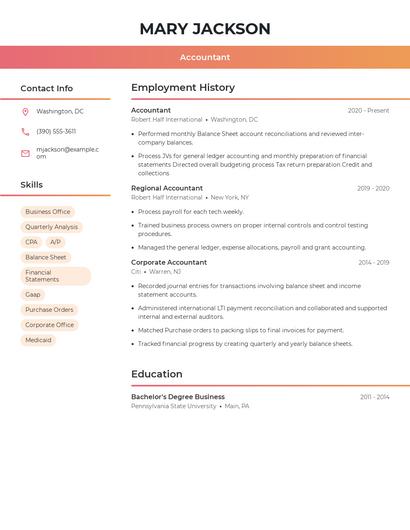
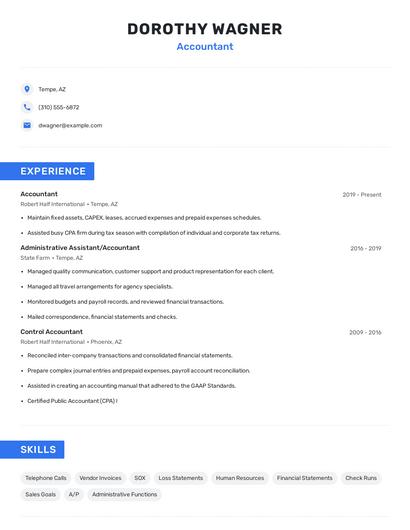
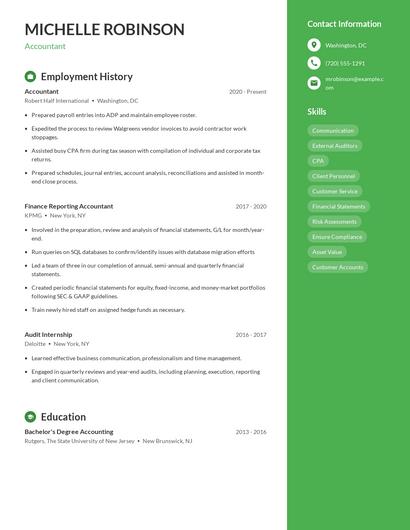
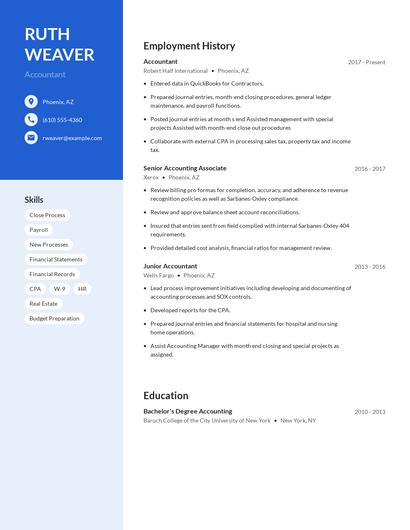
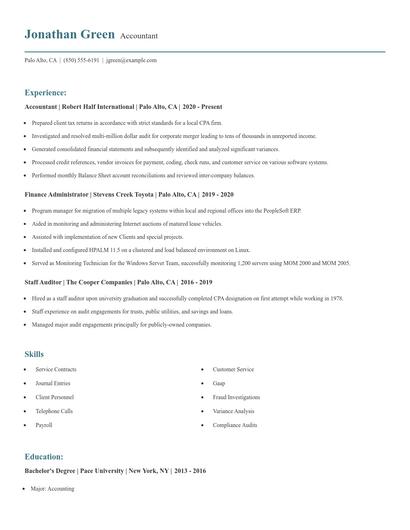
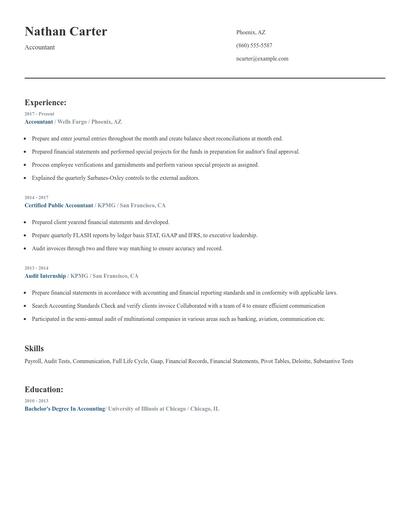
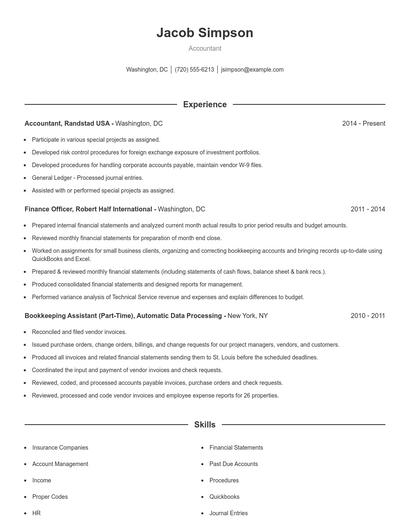
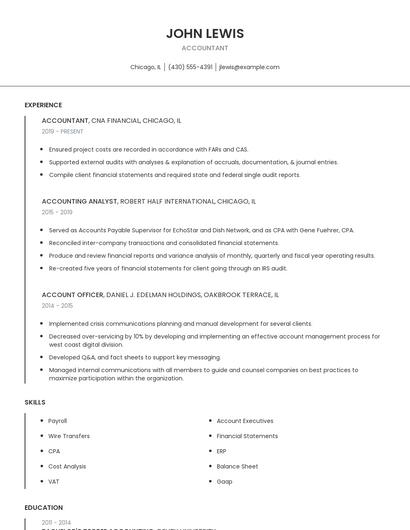
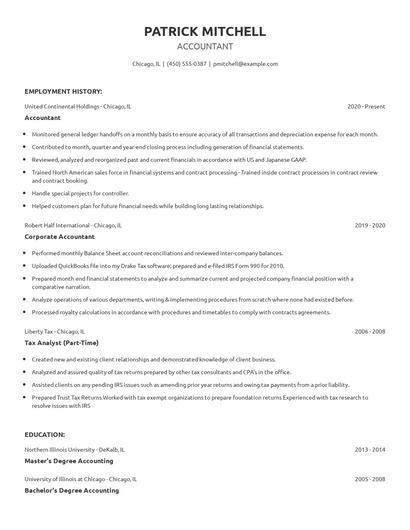
Choose from 10+ customizable resume templates
Zippia allows you to choose from different easy-to-use templates, and provides you with expert advice. Using the templates, you can rest assured that the structure and format of your resume is top notch. Choose a template with the colors, fonts & text sizes that are appropriate for your industry.