Explore jobs
Find specific jobs
Explore careers
Explore professions
Best companies
Explore companies
This question is about cyber security analyst.
What is the career path for cybersecurity?
The career path for cybersecurity includes jobs as a security engineer, incident responder, and cybersecurity manager. There are many different fields and career paths to pursue beneath the wide umbrella of cybersecurity.
To start a career in cybersecurity you need to get a formal education in cybersecurity, obtain certifications, network, and take a few other critical steps. Before we get into the specific career paths in cybersecurity, we'll first touch on how you get started in the field:
Get an education in cybersecurity. There are many different paths to starting a career in cybersecurity. Regardless of which you take, you need to educate yourself on the knowledge, skills, and technology used in cybersecurity.
One option is to get a bachelor's degree or a more advanced degree in cybersecurity.
Getting a college degree is obviously the most traditional and reliable route, however, today there are many faster ways to break into cybersecurity.
Certain online courses boast giving cybersecurity degrees in a matter of months or even weeks for the fraction of the cost of a college education, but you should do your due diligence here in finding out how reputable these institutions are and how accepted their degrees are in the current cybersecurity job market.
There are also tech boot camps that many people wanting to break into the industry use. These boot camps cost anywhere between $10,000 to $20,000 on average, and only take a matter of weeks to complete. Training specified in areas like software engineering, coding, and pen-testing, will give you a boost in obtaining a job in cybersecurity.
After completion of a boot camp, your job prospects should be close to the same as someone who has obtained a four-year degree.
Obtain cybersecurity certifications. Certifications are not a requirement, however, they help you stand out as a cybersecurity candidate, and many employers prefer candidates with certifications.
In addition to certifications, you should always keep your eye on the rapid development and evolution of technology used in cyber security. There are many free sources of information on the internet that can keep you up to speed in this arena.
Here are some of the best certifications you should consider in order to advance along the cybersecurity career path:
Certified Information Systems Security Professional (CISSP)
This is one of the most highly respected certifications in the industry and one that most want to gain for career advancement in the field. Earning a CISSP displays that you have professional experience in IT security. It also demonstrates that you are able to design, implement, and monitor a cybersecurity program.
This certification is best for those seeking to gain positions such as chief information security officer, security administrator, IT security engineer, senior security consultant, and information assurance analyst.
To qualify to take the exam for this certification you must have five years of work experience in at least two different fields of cybersecurity. These include fields like security and risk management, security architecture and engineering, communication and network security, asset security, identity and access management, security assessment and testing, security operations, and software development security.
Certified Information Systems Auditor (CISA)
This certification is from the IT professional association (ISACA) and displays abilities and expertise in the assessment of vulnerabilities, reporting on compliance, and the designing and implementing of controls. This is a highly respected certification in the cybersecurity auditing sector.
This certification is best for those seeking to gain roles like IT audit manager, cybersecurity auditor, information security analyst, IT security engineer, It project manager, and compliance program manager.
To gain this certification you must have at least five years of professional experience in IS or IT audit, control, assurance, or security. Two and four-year degrees can also stand in the place of one or two years of professional experience.
Certified Information Security Manager (CISM)
This is another certification offered by ISACA which displays expertise in the management field of information security. This includes subjects like program development, governance, risk, program, and incident management.
This is a great option for those looking to pivot from the technical side of cybersecurity into more managerial roles, such as IT manager, information systems security officer, information risk consultant, director of information security, and data governance manager.
You must have at least five years of experience in information security management to sit for the CISM exam.
CompTIA Security+
This certification is great for newcomers to the cybersecurity career path. It is an entry-level certification that demonstrates core skills for any role within cybersecurity. Some of these skills include the ability to assess the security of a company or business, monitor and security of cloud services, mobile, and internet of things (IoT) environments.
It also shows you understand basic laws and regulations that govern cybersecurity and relate to risk and compliance, and identifying and responding to security scenarios.
This certification is great for those just starting out on the cybersecurity career path and seeking roles like systems administrator, security engineer, help desk manager, cloud engineer, IT auditor, and software developer.
There are no strict requirements to take the exam for this certification, however, it is encouraged that you earn your Network+ certification first, and also gain at least two years of professional cybersecurity experience in IT.
Certified Ethical Hacker (CEH)
This is a certification for those interested in ethical hacking, otherwise known as white hat hacking, penetration testing, or red teams. It displays skills in lawfully hacking companies and entities to try and find vulnerabilities in their security systems. This certification is offered by the EC-Council. It demonstrates abilities in penetration testing, vectors, attack detection, and prevention.
Those that would benefit from this certification include any looking to gain roles as a penetration tester, threat intelligence analyst, cyber incident analyst, cloud security architect, and cybersecurity engineer.
You need at least two years of experience in information security to sit for the CEH exam. Alternatively, you can complete an official EC-Council training to take the exam as well.
The certifications listed above are only a small selection of those available to individuals seeking to advance their careers in cybersecurity. Because cybersecurity has so many different facets and subcategories, and fields, you should do the proper research into which certifications work best for the type of career path you want to pursue in the field.
Networking. Once you have been educated and trained, you need to insert yourself into the professional communities of cybersecurity.
Networking is a crucial aspect in almost any industry and cybersecurity is no different. You should seek out cyber security conventions and other related events. These can be extremely valuable in building up your contact base.
You should also join career-based social media sites and reach out to other cybersecurity professionals. You can learn a great deal from these relationships and they may result in job opportunities or internships.
Apply for internships or entry-level cyber security positions. Lastly, attempt to get an entry-level cyber security job and work your way up the ladder. This includes an internship program.
Most internship programs are unpaid, however, they sometimes can result in full-time paid roles.
In addition, here are four examples of entry-level cyber security roles:
Information security analyst
Information security specialist
Digital forensic examiner
IT auditor
Engineering and Architecture
Security engineering and architecture might be a good choice of a cybersecurity career path if you are interested in playing with technology and like to take a macro approach to cybersecurity.
Security engineers utilize knowledge of threats and vulnerabilities to develop and implement digital defense systems against a wide variety of cybersecurity issues. Security architects are in charge of a whole wing of cybersecurity at an organization.
Skills needed for this career path include:
IT networking
System administration
Risk assessment
Critical thinking
Applicable certifications for security engineers and architects include CompTIA Security+, Systems Security Certified Practitioner (SSCP), Certified Information Systems Security Professional (CISSP), Google Professional Cloud Security Engineer.
Incident Response
Incident response professionals in cybersecurity must work well under pressure. They fix breaches in an organization's digital security and also minimize losses of data and information at these times.
Digital forensics is also involved in incident response roles, and you might have the opportunity to work with law enforcement agencies to gather data from digital devices and help them to investigate cybercrimes.
Essential skills for those wanting to go into incident response include:
Forensic software experience and abilities
Experience with intrusion detection tools
Technical writing and documentation
Good certifications for those wanting to excel on the incident response career path of cybersecurity include GIAC Certified Incident Handler (GCIH), EC-Council Certified Incident Handler (ECIH), Certified Computer Examiner (CCE), Certified Computer Forensics Examiner (CCFE).
Management and Administration
As you gain more and more experience in the cybersecurity industry you eventually might want to pivot from your current career path and land in a position involving cybersecurity management or administration.
Professionals in these areas manage a company's entire network and computer security systems, as well as develop protocols and strategies, and perform reviews to test performance and functionality. They often coordinate between large teams and ensure an organization's overall cybersecurity compliance.
This is a great career path if you are an exceptional communicator and possess strong leadership qualities.
Essential skills for those interested in management and administration in cybersecurity include:
Leadership
Communication
Project Management
Risk Management
Collaboration
If you are seeking to advance on this cybersecurity career path some certifications you should definitely consider obtaining include Certified Information Security Manager (CISM), Certified Project Manager (GCPM), Certified Information Systems Security Professional (CISSP).

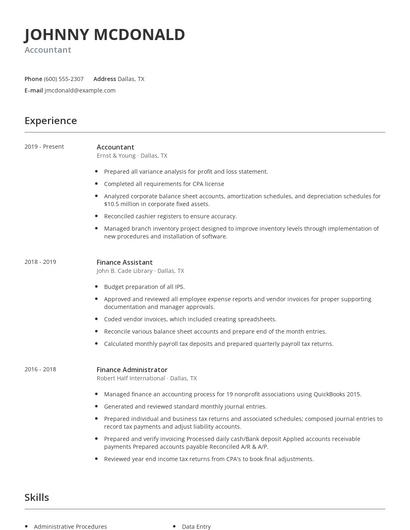
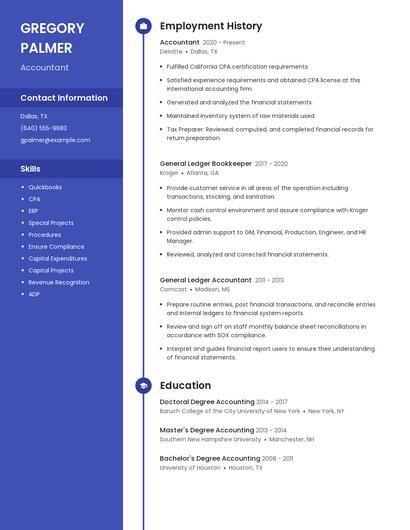
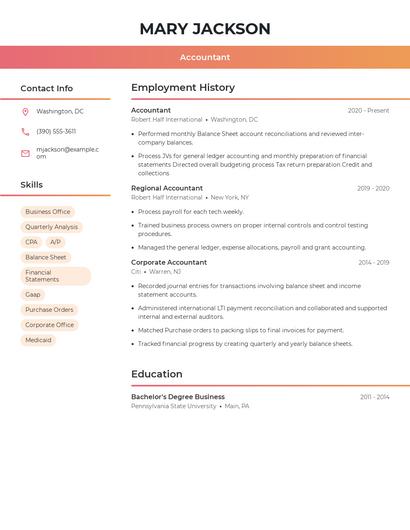
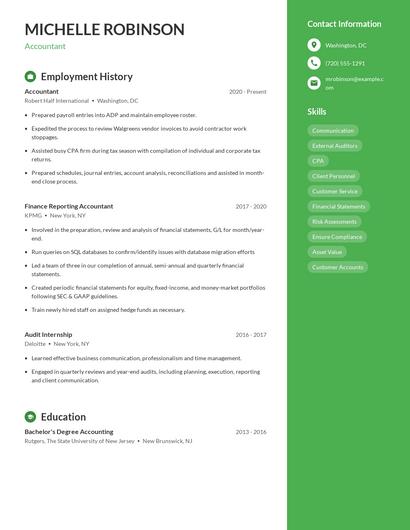
Choose from 10+ customizable resume templates
Zippia allows you to choose from different easy-to-use templates, and provides you with expert advice. Using the templates, you can rest assured that the structure and format of your resume is top notch. Choose a template with the colors, fonts & text sizes that are appropriate for your industry.