Explore jobs
Find specific jobs
Explore careers
Explore professions
Best companies
Explore companies
This question is about judge certifications.
What are the qualifications to be a judge?
The qualifications to be a judge are graduating from law school and obtaining a Juris Doctor, passing the bar exam, and completing training programs. Here is a description of these qualifications and others you need to be a judge:
Graduate from law school and obtain a Juris Doctor. This is a necessary step for nearly all judges. Some states allow you to be a judge without a law degree; however, the chances of you actually getting a judge position without a law degree are slim at best.
You must first pass the Law School Admissions Test (LSAT). To even be considered eligible to take the LSAT, you must have a stellar academic record and a bachelor's degree related to law.
The LSAT is an infamously difficult exam that acts as the gatekeeper to law school. It is designed to test skills that undergraduate students may have not yet fully developed, such as the reasoning skills in the logic games section.
Courses in law school include constitutional law, ethics, property law, criminal law, a lawyer-client relationship, and civil procedure. While you should do your best to retain knowledge from all of these classes, you need to develop a mastery of criminal law if you want to become a judge.
Law school generally takes about three years to complete, and upon graduating, you will receive a Juris Doctor (JD).
Pass the bar exam. If you make it through law school, you then must pass the Bar exam, which is even harder than the LSAT. The Bar exam requires you to do an immense amount of critical thinking when answering the written questions.
Philosophy, ethics, and many other esoteric topics may come into play when answering questions on the Bar exam. Not to mention you need to know your laws. The exam differs from state to state but usually takes two days to complete.
And make sure that you take the Bar exam in the state in which you want to become a prosecutor; otherwise, you'll likely have to take it again. The Bar exam is notoriously known to be difficult, with many law students needing to take it multiple times to pass.
Get appointed or elected to the court. Generally, only experienced lawyers are considered for judge positions, so you need to make your mark as an attorney or prosecutor first before you can even consider becoming a judge.
Most judges have years upon years of experience in the law, qualifying them for the role. The process of being appointed or elected often involves politics. Some judges are elected by voters, while others are appointed by state or federal officials. In some states, appointed commissions evaluate candidates for judgeships.
Complete Judgeship training. Both elected and appointed judges complete training programs. This is required in every state. Judicial education programs are given by the National Center for State Courts (NCSC) and the American Bar Association (ABA). In most states, judges are required to continue their education during their whole careers.

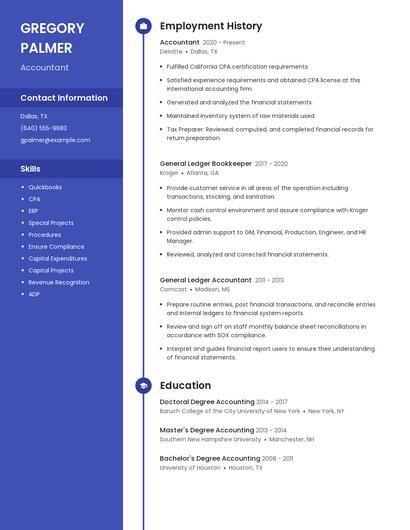
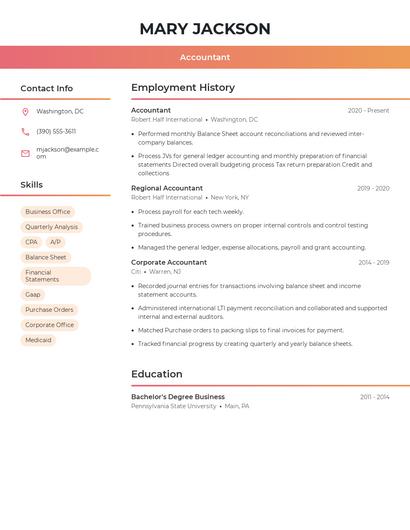
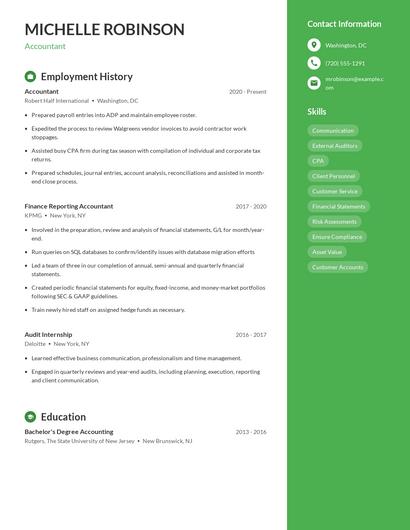
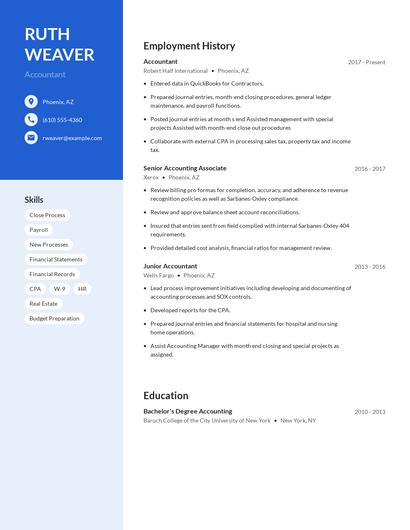
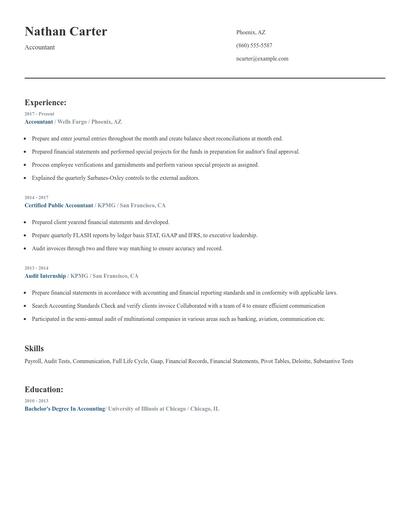
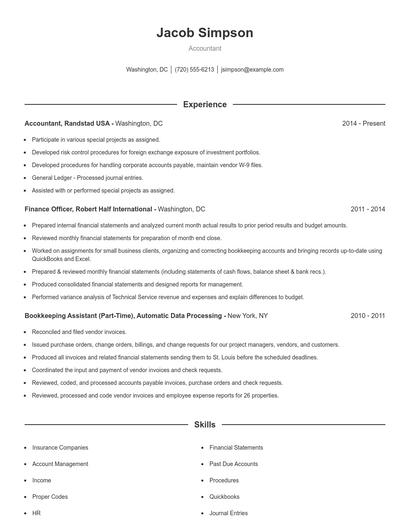
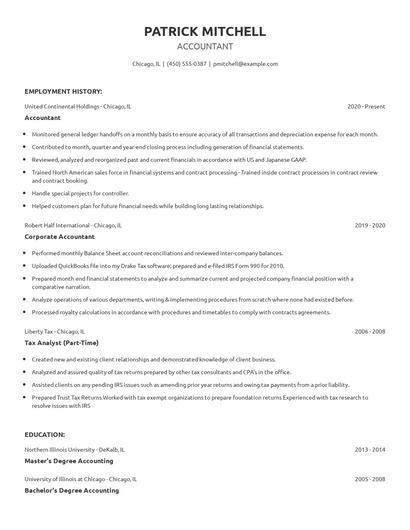
Choose from 10+ customizable resume templates
Zippia allows you to choose from different easy-to-use templates, and provides you with expert advice. Using the templates, you can rest assured that the structure and format of your resume is top notch. Choose a template with the colors, fonts & text sizes that are appropriate for your industry.