Explore jobs
Find specific jobs
Explore careers
Explore professions
Best companies
Explore companies
This question is about software engineer.
What is the career path for a software engineer?
The career path for a software engineer includes jobs as a junior software engineer, a senior software engineer, and a tech lead.
While this might be the most common software engineer career path, there are many different on and off-ramps to other roles in the tech industry when you are a qualified software engineer, some of these include front-end engineer, back-end engineer, full stack developer, mobile app developer, data engineer, graphics engineer, security engineer, and many others.
For simplicity, we will only cover the most common software engineering career path, but you should know that you might have many different options for pivoting and specializing, depending on your particular area of expertise in software engineering.
There are many different routes to get into software engineering. Regardless, you need a proper education concerning the knowledge, skills, and technology used in software engineering.
Getting a college degree is obviously the most traditional and reliable route. You can obtain a bachelor's or master's degree in software engineering, or other related fields, such as computer science, or software development.
Currently, though, there are many faster ways to break into software engineering.
Certain online courses boast giving software engineering degrees in a matter of months or even weeks for the fraction of the cost of a college education, but you should do your due diligence here in finding out how reputable these institutions are and how accepted their degrees are in the current software engineering job market.
There are also coding boot camps that many people who want to break into the industry use. These boot camps cost anywhere between $10,000 to $20,000 on average, and only take a matter of weeks to complete. Training specified in areas like software engineering, coding, and software development, will give you a boost in obtaining a job in software engineering.
After completion of a coding boot camp, your job prospects should be close to the same as someone who has obtained a four-year degree.
There are also extremely critical programming languages you must familiarize yourself with to be a software engineer, these might vary depending on where you end up working and what you end up working on, but you should still try to familiarize yourself with as many as possible.
Here are the four most common programming languages to know as a software engineer:
JavaScript
Javascript is one of the most common programming languages used to make websites interactive.
It is a required skill for web developers, along with HTML, and CSS. JavaScript is a computer language that is used for programming and scripting. It allows programmers to develop complex features for websites.
This includes things like graphics, interactive maps, tickers, or videos. Most of these features are usually completed with the assistance of JavaScript. JavaScript allows you to then enhance the content of your webpage in a dynamic fashion.
You can fine-tune multimedia controls, make creative and interactive content, and do animation when using JavaScript. It takes approximately six to nine months to gain a firm understanding of JavaScript.
Python
Fundamentals in Python include object data structures, variables and types, comparison operators, indexing and splicing, loops, functions, lists, dictionaries, tuples, reading and writing to files, web scraping, classes and objects, and application programming interfaces(APIs).
It is also crucial when starting out, to focus more on logic than syntax when learning Python. This means having a good comprehension of the how and the why of your lines of code rather than memorizing the syntax. You are going to memorize some of the syntax by default anyway if you are doing the proper amount of repetition.
Python is an extremely versatile language and may be used for data visualization, statistical analysis, machine learning, web and software development, and task automation or scripting. It's really up to you as far as what you want to achieve with it, once you have the basics down. It takes two to six months to learn Python in general, and it is arguably the simplest programming language to learn.
C++
C++ is an object-oriented language that can be utilized for high-level and low-level functions. C++ can be used for many different purposes, such as displaying video game graphics or extracting data from big data sets. This universal programming language works on all types of operating systems and can be used to develop any type of software.
Some key functions you should touch on at the beginning of learning C++ include declaring variables, collecting user input, storage of information, repeating an action through loops, and writing functions to repeat blocks of code.
It has an intermediate difficulty level and typically takes at least 3 months to learn, while building mastery of this language takes two years or more.
Scala
Scala is a new programming language starting to gain popularity in the field of software engineering. Compared with JavaScript and C++, it is relatively easy to learn. Scala can often be written in just a fraction of the number of lines required to write an equivalent function in JavaScript.
There can be a major productivity benefit when using Scala, it allows software engineers and developers to do more functional work in their day-to-day job tasks. Fewer lines of code make testing, code review, and debugging a lot easier.
It takes approximately two to three months to gain a good foundational footing with Scala. Aside from programming languages, you should keep your eye on the rapid development and evolution of all technology used in software engineering.
There are many free sources of information on the internet that can keep you up to speed in this area. And this practice is not only suggested for new software engineers, but those that find themselves at any stage of the software engineering career path.
Once you have been educated and trained, insert yourself into the professional communities of software engineering. Networking is a crucial aspect in almost any industry and software engineering is no different.
Now we'll take a closer look at the most common software engineering career path:
There are many different hard and soft skills that must be developed and utilized for a successful career in software engineering.
Hard skills include:
Knowledge in front-end coding and back-end coding
A strong comprehension of agile development methods
The ability to skillfully test and debug code that you write
Knowledge about how to write clean code containing clear comments
Soft skills include:
Excel at communicating technical information, in both written and verbal form
Time management
Team collaboration
Analysis
Problem-solving
And here are some tips to help you advance along the software engineering career path:
If possible, take on extra work outside of your roles required tasks and duties
Help others on the development team when they are struggling
Try to collaborate closely with other departments at your company, such as UX design, marketing, data analysis, and others to gain a strong sense of their needs and functions
Be sure to ask questions concerning the macro goals of your company or clients
Ask for feedback from senior software engineers on how to improve your code
Get involved with software engineering communities outside of work, including attending related events, conferences, and also networking professionally online
Seek to share software engineering developments and industry-related articles with your team to establish your position as a leader who is invested in their career
Citing the Bureau of Labor Statistics, the demand for software developers is expected to grow by 22% from 2019 to 2029. That's a great faster than the average growth of other careers.
The demand for software engineers is driven mainly by the fact that almost any organization needs an online presence, and has expanding technology needs. Software engineers have the skills to keep companies competitive and relevant in the digital age. Most software engineers can gain roles that pay $100,000 per year, and in some cases much more than that.
If you are entering this area, you can count on there being many job opportunities with considerable salaries, even for entry-level roles. You are also likely to be able to find work basically anywhere you want to in the United States, as well as having the ability to gain remote software engineering positions that you can perform from anywhere.

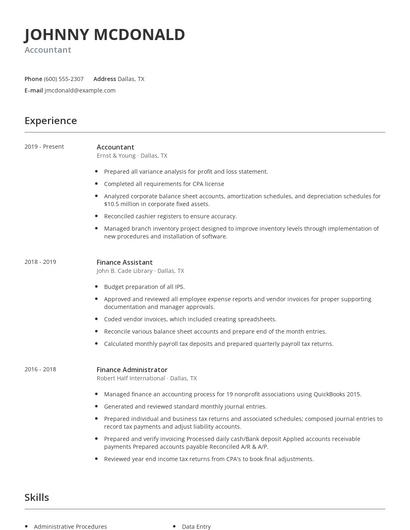
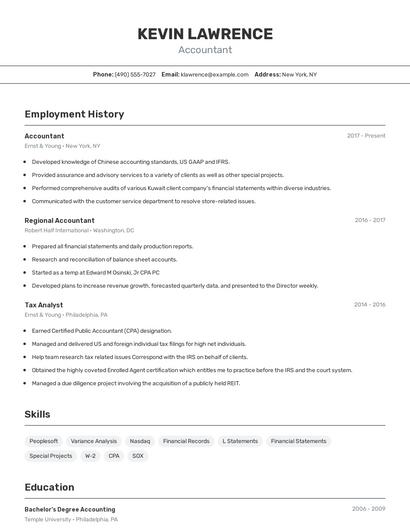
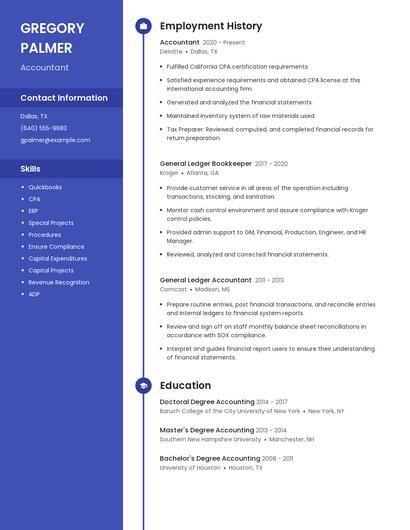
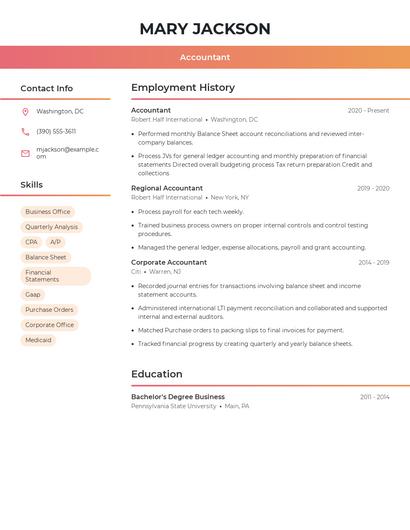
Choose from 10+ customizable resume templates
Zippia allows you to choose from different easy-to-use templates, and provides you with expert advice. Using the templates, you can rest assured that the structure and format of your resume is top notch. Choose a template with the colors, fonts & text sizes that are appropriate for your industry.