Explore jobs
Find specific jobs
Explore careers
Explore professions
Best companies
Explore companies
This question is about counselor certifications.
What are the qualifications of a counselor?
The qualifications of a counselor are education, training, and licensure or certifications. A counselor can take many forms, such as a social worker, guidance counselor, or mental health counselor.
Counselors can take many forms, but in most cases, counselors focus on one specific issue pertaining to a client for a limited amount of time.
For example, guidance counselors advise students in preparation for college or graduation from college, and drug counselors focus on a client's addiction to a specific drug in hopes of leading them into recovery. Mental health counselors see clients for specific conditions or disorders, such as depression or anxiety.
Here are more details on the qualifications of a counselor:
Education
You should study education, psychology, sociology, or social work to become a counselor. If you major in any one of these areas, it will give you the right prerequisite knowledge for the profession.
However, just be sure to take additional classes on two of these subjects, depending on which of the three you choose to major in. Nearly all counselors have obtained at least a bachelor's degree in one of these areas or a related field.
Most counseling positions require a master's degree in counseling or one of the related fields just mentioned. Obtaining a master's degree may also present you with better job opportunities and higher salaries in counseling.
There are many different kinds of counselors. Depending on what type of counselor you want to be will affect the educational and professional requirements for the role. Here are some counselor and counselor-related positions:
Substance Abuse Counselor
Substance abuse counselors specialize in addiction, recovery, and management. Social workers in this realm work with both individuals and groups in an attempt to achieve and maintain sobriety. They also seek to remedy broken aspects of an addict's life, such as personal or professional relationships.
Guidance Counselor
Guidance counselors are professionals who assist student populations with their educational development and future planning. They work in all types and levels of educational institutions, from elementary schools to universities.
Medical Social Worker
Medical social workers specialize in public health, geriatric, palliative, inpatient, or mental health care. Medical social workers can find themselves in a number of different medical settings depending on where their clients and patients are located. These can be hospitals, psychiatric facilities, outpatient clinics, community health clinics, and more.
School Social Worker
School social workers help individuals and groups of students with mental health issues surrounding their academic life. They also help teachers, parents, and administrators support the mental well-being of students. Generally, school social workers' main goal is to make schools safer places for students and help them to feel empowered in their learning.
Community Outreach Worker
Community outreach workers typically work for a non-profit or government institution. Their aim is to improve the lives of community members by organizing events and providing services that focus on healthcare and social services for underserved groups of a community.
Foster Care Social Worker
Foster care social workers are also known as case managers. These social workers act as advocates for children in the foster care system. They also can be counselors to the foster care population of the establishment they work at. A foster care social worker's primary responsibility is the physical and emotional welfare of children.
Training for counseling
While obtaining a master's degree, most aspiring counselors get a year or two of practical training in the field through an internship program they must complete to obtain their degree.
Internship programs see them working under the supervision and guidance of an experienced counselor during counseling sessions with students, clients, or patients. They also often have to perform client or student assessments while completing their internship program.
Most counselors must obtain a certain number of clinical hours during their internship programs. For example, guidance counselors must obtain at least 600 hours of clinical experience during their internship.
Once a counselor is hired for a position, they typically receive some on-the-job training. This training may include gaining an understanding of the specific practices and protocols the facility or institution adheres to and the software and computer programs they utilize.
Counselors also can obtain training outside of their workplaces at relevant seminars and conferences. Here, any number of things may be discussed that will lead to improving their skills as a counselor.
This includes topics like specific counseling strategies and new developments in the area. They also get to meet other professionals in the field and learn about different trends in their specific field of counseling.
Certifications
Counselors can obtain many different certifications to exhibit their expertise in their particular area of counseling.
Guidance counselors must earn a state license to practice their profession and be hired by an educational institution. However, requirements for this license will vary from state to state.
Most require a master's degree and the completion of practical experience under the supervision of a professionally licensed counselor. Certain states also require candidates to pass an exam in addition to their application for licensure.
Aside from licensure, there are many certifications that can be obtained by guidance counselors. This can open them up to more senior-level roles and jobs that have higher-paying salaries.
National Certified Counselor (NCC)
This certification is offered by the National Board for Certified Counselors (NBCC). It shows that a guidance counselor has the necessary skills and expertise to provide guidance counseling services.
To get this certification, candidates must have completed a master's degree program in counseling, obtained supervised counseling hours, and received a letter of recommendation. They must also pass an NBCC exam.
National Certified School Counselor (NCSC)
This is another certification offered by the National Board for Certified Counselors. To gain this certification, candidates must have already obtained their NCC certification.
They also must complete coursework in a few specialized areas of the field, as well as gain the required amount of supervised counseling hours. Candidates need to submit a letter of recommendation for this certification and pass another NBCC exam.
The Early Childhood Through Young Adulthood/School Counseling
This certification is offered by the National Board for Professional Teaching Standards (NBPTS). This exhibits that a guidance counselor has the professional capacity to advise students on several different topics. To get this certification, candidates must provide proof of counseling experience and pass an online test.
Licensure is a requirement for a guidance counselor in just about every state. Certifications may not be requirements for entry-level roles but can be required for higher roles in the field.
No matter the form of counseling, most states will not allow you to legally practice or accept health insurance from clients unless you are certified or have obtained a license as a counselor.
A valid state counseling license/certification serves as proof that a counseling professional has met state-determined qualification standards, including a minimum level of education and requisite hours of supervised clinical experience.
Research the licensing or certification requirements in the state in which you want to practice as a counselor. Learn how many professionally supervised and fieldwork hours are necessary in your state of interest and how and where you can fulfill them. Find out the details about licensing or certification exams, including costs, study guides, and registration.

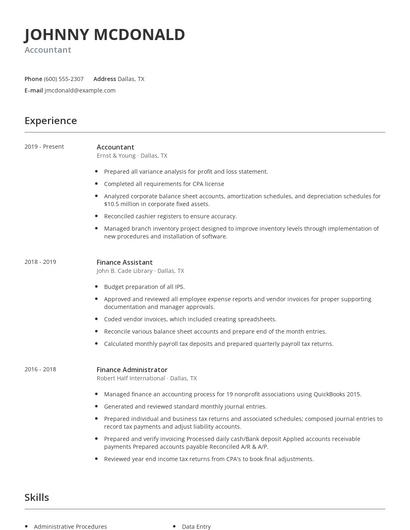
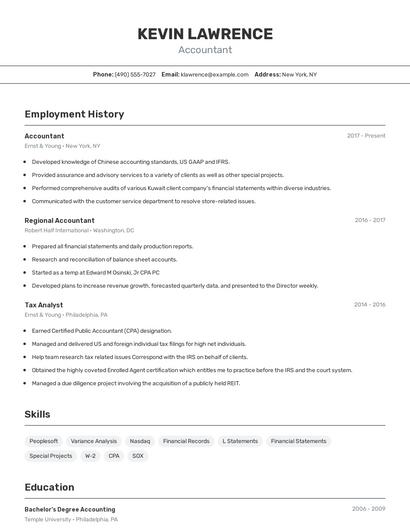
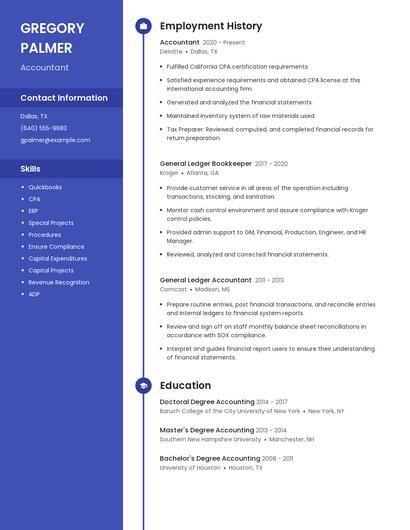
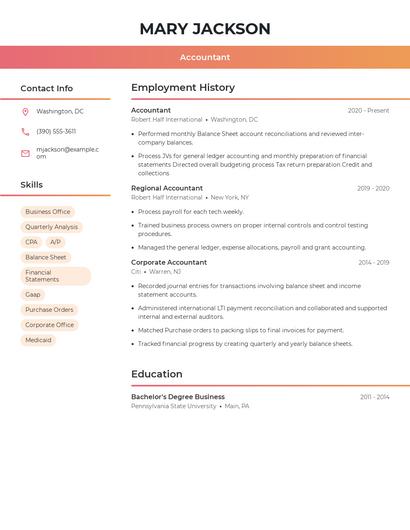
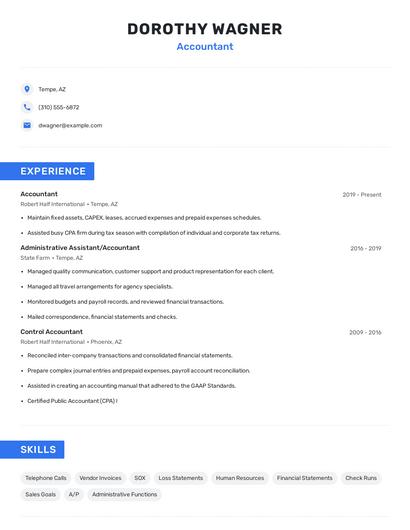
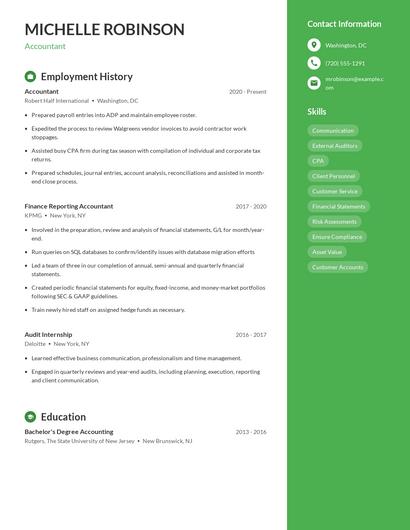
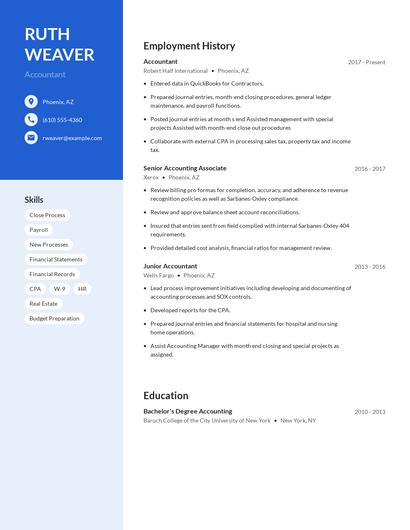
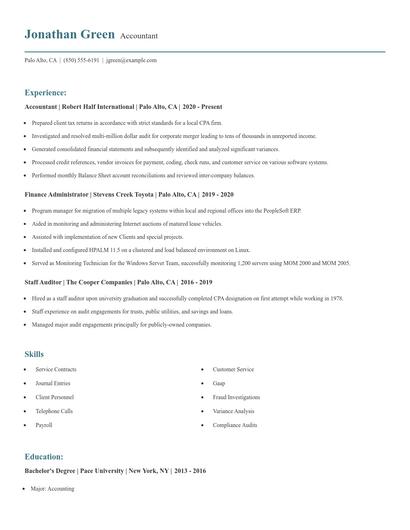
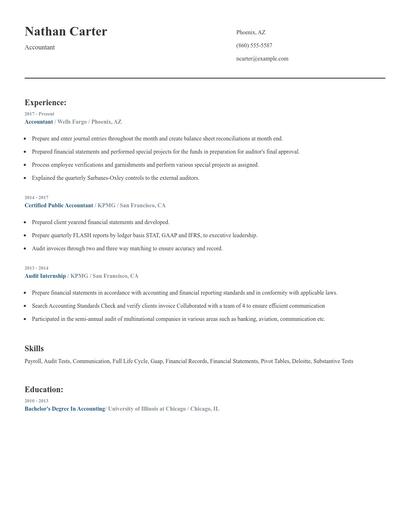
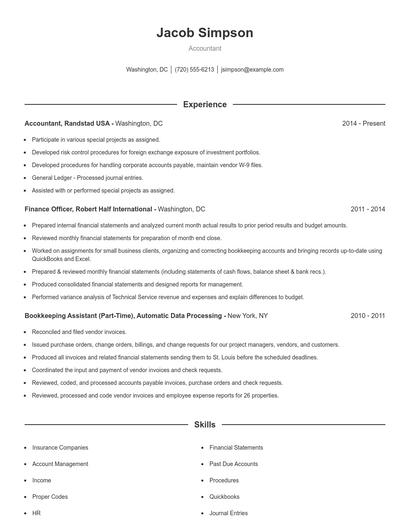
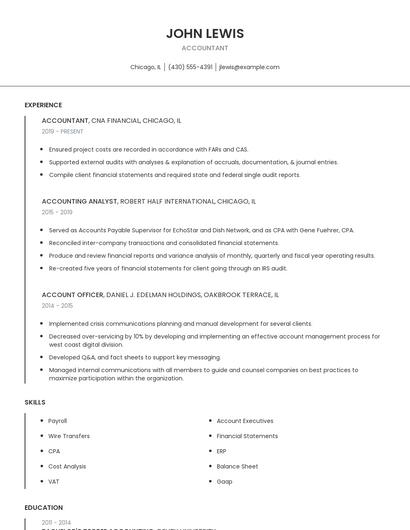
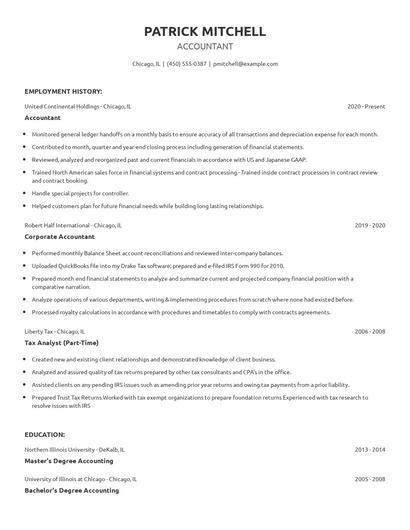
Choose from 10+ customizable resume templates
Zippia allows you to choose from different easy-to-use templates, and provides you with expert advice. Using the templates, you can rest assured that the structure and format of your resume is top notch. Choose a template with the colors, fonts & text sizes that are appropriate for your industry.