Explore jobs
Find specific jobs
Explore careers
Explore professions
Best companies
Explore companies
This question is about human resources manager.
What are careers in human resource management?
Benefits administrator, payroll specialist, and HRIS specialist are careers in human resource management.
Benefits Administrator
Benefits administrators are specialists who design and administer a company's benefits programs.
They are typically required to negotiate with insurance and retirement plan providers and make recommendations regarding the best choice under company goals. They may also administer wellness, legal, transportation, and other assistance programs and are typically responsible for entering employee elections into the system.
When analyzing and preparing benefits packages, benefits administrators generally consider cost and features, as well as the overall performance and responsiveness of service providers. Once they have determined the optimal components, they present their findings and recommendations to management or leadership for approval.
Benefits administrators often assist newly hired employees with enrollment and meet with all employees during open enrollment periods to explain plan changes and options. They may be responsible for processing billing and resolving discrepancies with insurance providers.
Other duties of benefits administrators may include communicating with employees to ensure a thorough understanding of benefits, consulting with individuals about coverage for medical procedures, and following guidelines for legal compliance. Most benefits administrators work in an office setting and work a standard 40-hour work week.
Payroll Specialist
Payroll specialists oversee all aspects of timesheet and payroll processing to ensure payroll processing remains compliant, accurate, and on time. Specific responsibilities may vary based on the size of the company the payroll specialist works for and the industry of the company, but typically include:
Preparing and submitting payroll checks
Collecting banking information and setting up direct deposits
Processing deposits on paydays
Keeping policies and procedures related to taxation, salaries, and other payroll factors current
Documenting and maintaining payroll records
Auditing payroll records
Reconciling general ledgers regarding payroll transactions
Detecting and processing issues related to uncollected payroll
Responding to employee inquiries regarding payroll issues
Processing garnishments
Payroll specialists often get into the role after first working as a payroll clerk or another entry-level position after completing the bachelor's degree program. Payroll specialists will also often receive additional on-the-job training specific to their role and the company.
This additional training is usually part of the onboarding process for their new role. On-the-job training can last for a period of a few days up to a few months depending on the company and the role. There are also several certification programs that payroll specialists may consider.
HRIS Specialist
A human resources information systems (HRIS) specialist is responsible for collecting employee data and compiling it into reports for department leads. HRIS comprises all of the systems responsible for the functioning of a human resources department. These include:
Applicant tracking
Employee management
Raises
Promotions
Training
Pay and benefits
Termination systems (voluntary and involuntary)
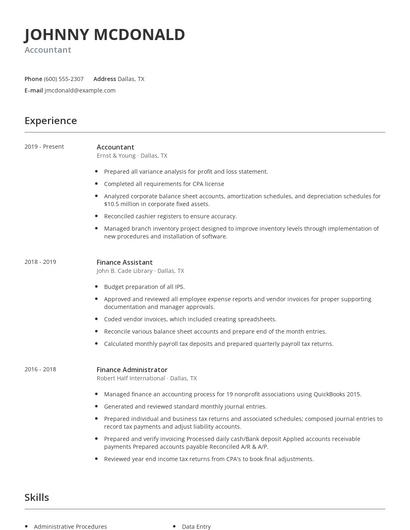
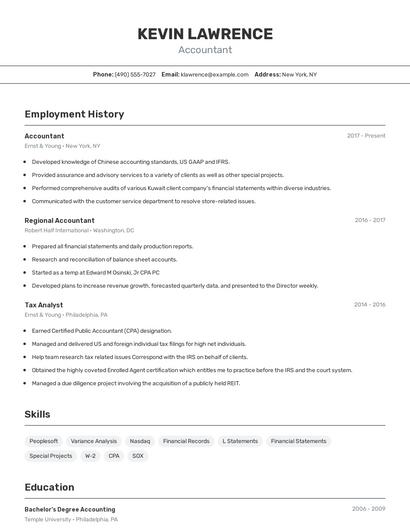
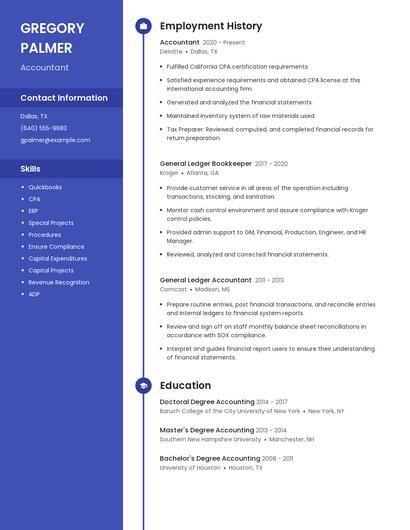
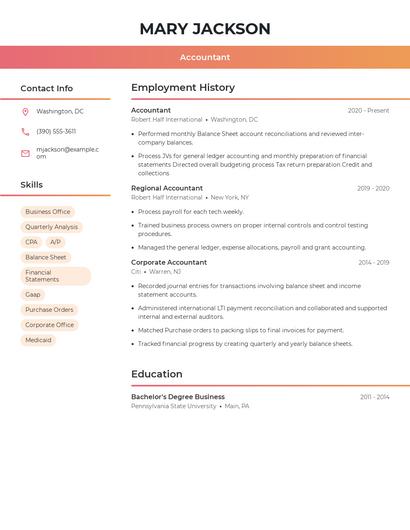
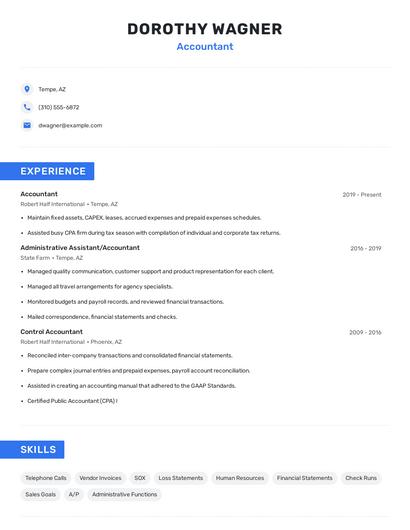
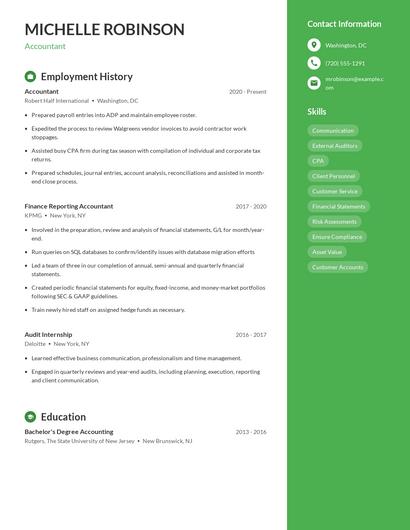
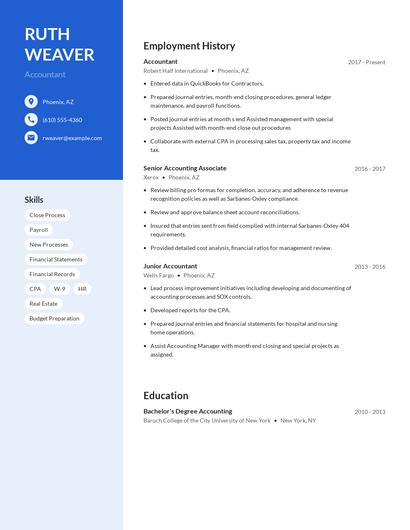
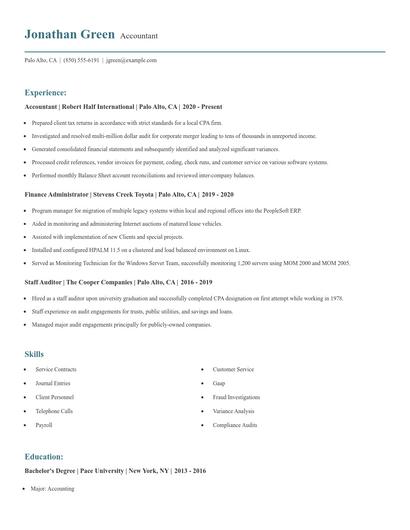
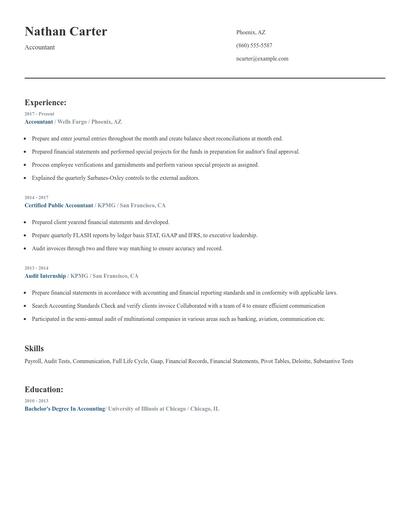
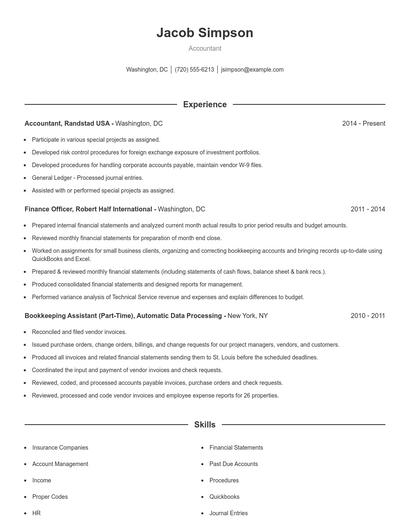
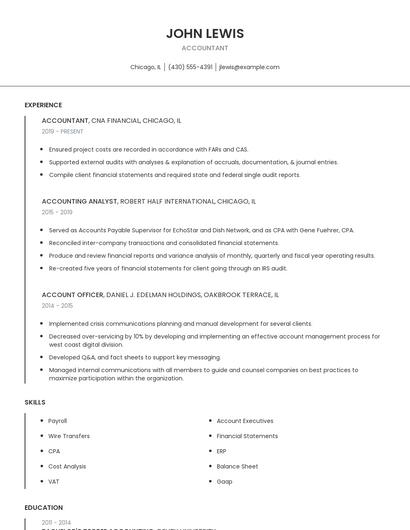
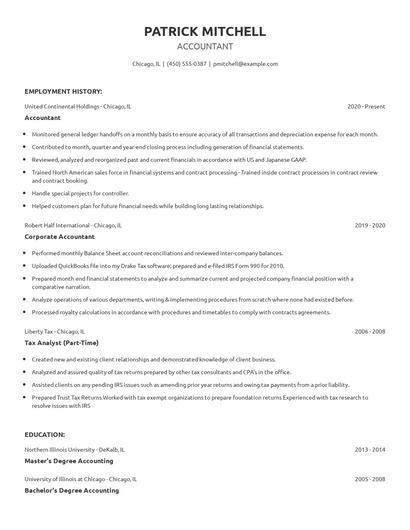
Choose from 10+ customizable resume templates
Zippia allows you to choose from different easy-to-use templates, and provides you with expert advice. Using the templates, you can rest assured that the structure and format of your resume is top notch. Choose a template with the colors, fonts & text sizes that are appropriate for your industry.