How Much Time Remote Workers Saved Not Commuting in 2026
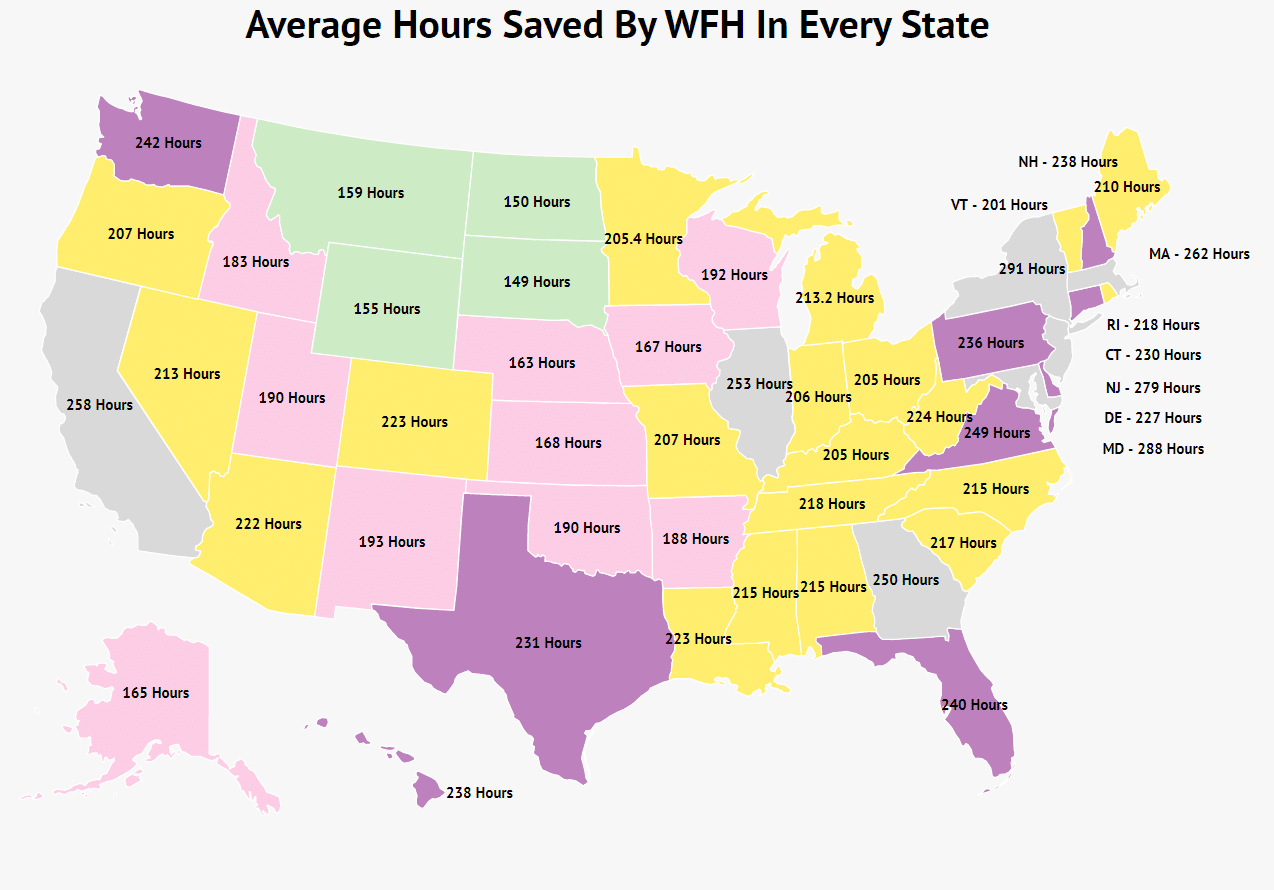
New Yorkers saved the most time on their commutes, averaging 291 hours per year.
In South Dakota, workers saved only 149 hours on average.
Workers in New York City, NY experienced significant savings, with an impressive 360 hours saved annually.
Conversely, workers in Lubbock, TX saved an average of 144 hours.
In March 2020, the unexpected shift to remote work began, reshaping the American work landscape. Many workers discovered that they could not only be productive at home but also save both time and money.
As we reflect on the evolution of work in 2026, many individuals are still grappling with the loss of time gained from their daily commutes as workplaces adapt to hybrid models.
Instead of enjoying a morning routine filled with coffee or quality time with family, many are once again facing congested commutes, often leading to frustration.
In this article, we explore the average time saved by remote workers over the past year and the anticipated time lost as many return to the office.
We’ll first analyze the time saved by state, followed by a detailed look at the time saved by city.
The States That Saved The Most Time
| Rank | State | Hours Saved |
|---|---|---|
| 1 | New York | 291 |
| 2 | Maryland | 288 |
| 3 | New Jersey | 279 |
| 4 | Massachusetts | 262 |
| 5 | California | 258 |
| 6 | Illinois | 253 |
| 7 | Georgia | 250 |
| 8 | Virginia | 249 |
| 9 | Washington | 242 |
| 10 | Florida | 240 |
As anticipated, states with dense populations and urban centers saved the most time by avoiding commutes. In contrast, western states with lower populations showed significantly fewer hours saved. Notably, even South Dakota saved 149 hours, translating to over three and a half work weeks.
The States That Saved The Least Time
| Rank | State | Hours Saved |
|---|---|---|
| 1 | South Dakota | 149 |
| 2 | North Dakota | 150 |
| 3 | Wyoming | 155 |
| 4 | Montana | 159 |
| 5 | Nebraska | 163 |
| 6 | Alaska | 165 |
| 7 | Iowa | 167 |
| 8 | Kansas | 168 |
| 9 | Idaho | 183 |
| 10 | Arkansas | 188 |
While state-level data provides a broader perspective on commutes, city-specific data offers a more accurate picture for individuals. For instance, workers in New York City face traffic challenges that are far greater than those encountered by employees in Albany, New York.
Although some cities saved more time than others, all workers benefitted from the reduced commute, allowing them to spend their hours on more fulfilling activities. A comprehensive breakdown of the top 150 cities can be found below, along with our methodology.
How We Determined This
To simplify our analysis, we assumed one year of working remotely. While individual circumstances may vary, this serves as a reliable benchmark.
We utilized data from the U.S. 5-year American Community Survey to ascertain the average commute times in each state and the 150 cities with the largest workforce. We calculated round-trip commute times by doubling the average one-way commute, subsequently assuming a standard Monday-to-Friday work schedule of 260 days. This figure was then converted into hours saved by commuting in each location.
The Work-Life Balance Dilemma
Many workers continue to struggle with achieving a healthy work-life balance, often feeling overwhelmed by the demands of their jobs.
Long commutes can exacerbate this imbalance, leading to decreased job satisfaction. Flexibility and remote work options have become increasingly sought-after benefits, particularly among younger workers.
The pandemic has amplified the desire for flexible work environments, with many now prioritizing these options when evaluating job opportunities. Remote work has been a growing trend even before the pandemic, but Covid-19 has accelerated its acceptance in the workplace. Perhaps for many, the comforting ritual of enjoying morning coffee at home instead of enduring road rage is here to stay.
Time Saved by Working Remotely in Each City: From Most to Least
In conclusion, the shift towards remote work has brought significant changes in how we perceive time, productivity, and work-life balance. As organizations continue to adapt to hybrid work models, the lessons learned during the pandemic remain relevant. The future of work will likely prioritize flexibility, allowing individuals to reclaim valuable time and enhance both their professional and personal lives.

Author

Kathy is the head of content at Zippia with a knack for engaging audiences. Prior to joining Zippia, Kathy worked at Gateway Blend growing audiences across diverse brands. She graduated from Troy University with a degree in Social Science Education.